
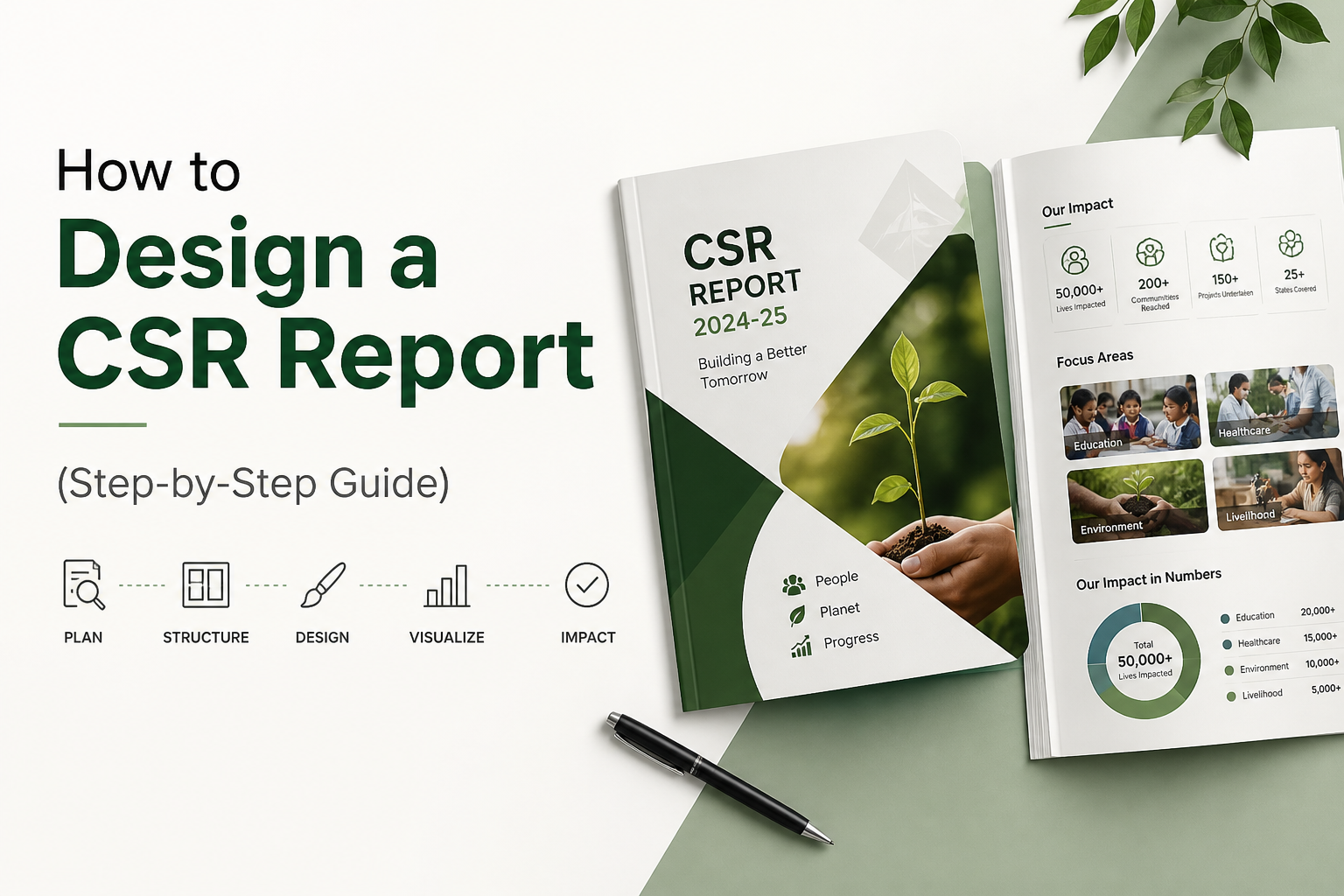
How to Design a CSR Report (Step-by-Step Guide)
Designing a CSR report is not just about putting together content and images. It’s about presenting your company’s social impact in a way that is clear, structured, and meaningful.
Many companies invest heavily in CSR activities—education programs, healthcare initiatives, sustainability projects—but when it comes to the report, the impact often gets lost. Not because the work isn’t valuable, but because the presentation fails to communicate it effectively.
In this guide, we’ll break down how to design a CSR report step by step, so your report doesn’t just inform—but actually engages and builds trust.
Step 1: Start with Clear Content Structure
Before jumping into design, the most important step is structuring your content properly.
A well-designed CSR report always follows a logical flow. Without structure, even the best design won’t work.
Here’s a simple structure you can follow:
- Company overview
- CSR vision and objectives
- Key focus areas (education, environment, etc.)
- Project details
- Impact metrics
- Future goals
This structure helps readers navigate the report easily and understand your story without confusion.
When you’re planning your CSR report design, think of it like storytelling—not just documentation.
Step 2: Define a Clean Layout System
Once your content is structured, the next step is layout planning.
A clean CSR report layout ensures that information is easy to read and visually balanced.
Avoid the common mistake of filling every page with text. Instead:
- Use margins and white space
- Follow a consistent grid system
- Keep alignment clean
- Maintain equal spacing between elements
A good corporate report design is not crowded. It gives breathing space to content.
Remember, design is not about adding more—it’s about removing clutter.
Step 3: Focus on Visual Hierarchy
Visual hierarchy is what guides the reader’s attention.
Not everything in your report should look the same. Some elements should stand out more than others.
Here’s how you can create strong hierarchy:
- Use larger font sizes for headings
- Highlight key numbers
- Break content into sections
- Use bold text for important points
For example, instead of hiding “50,000 lives impacted” inside a paragraph, make it a bold visual highlight.
This small change can significantly improve how your CSR report communicates impact.
Step 4: Convert Data into Visuals
CSR reports usually contain a lot of data. But raw numbers don’t always create impact.
That’s why data visualization is a key part of CSR report design.
Instead of writing everything in text:
- Use charts for comparisons
- Use icons for categories
- Use infographics for summaries
Visuals make information easier to understand and faster to consume.
A well-designed CSR report doesn’t just present data—it simplifies it.
Step 5: Maintain Consistent Design Elements
Consistency is what makes your report look professional.
Inconsistent fonts, colors, or layouts can make even a good report feel unorganized.
To maintain consistency:
- Use 1–2 fonts throughout
- Stick to your brand colors
- Follow the same layout style across pages
- Keep icon styles uniform
Consistency builds trust. It shows attention to detail and strengthens your brand identity.
Step 6: Keep It Simple and Readable
One of the biggest mistakes in CSR report design is overcomplicating things.
Too many design elements, too much text, and too many colors can overwhelm the reader.
Instead:
- Use short paragraphs
- Break content into bullet points
- Avoid unnecessary graphics
- Keep design minimal
A simple and clean CSR report is always more effective than a complicated one.
Clarity should always be your priority.
Step 7: Add Real Impact Stories
Numbers are important, but stories create emotional connection.
Adding real examples from your CSR initiatives makes your report more relatable.
You can include:
- Beneficiary stories
- Before-and-after scenarios
- Photos from actual projects
This brings authenticity to your CSR report and helps readers connect with your work.
Step 8: Review and Refine
Once your design is ready, take time to review it carefully.
Check for:
- Alignment issues
- Inconsistent spacing
- Font mismatches
- Data accuracy
It’s also a good idea to get feedback from someone outside your team.
A fresh perspective can help you identify areas for improvement.
Why Good CSR Report Design Matters
A CSR report is more than just a formal document.
It represents your company’s values, credibility, and commitment to social responsibility.
A well-designed report:
- Improves readability
- Builds trust with stakeholders
- Communicates impact clearly
- Strengthens brand perception
On the other hand, a poorly designed report can reduce the perceived value of even the best initiatives.
Final Thoughts
Designing a CSR report is not just about aesthetics—it’s about communication.
When done right, your report becomes a powerful tool to showcase your impact and build trust with your audience.
Focus on structure, clarity, and visual storytelling.
Because in the end, it’s not just what you’ve done that matters—
It’s how well you present it.
If you’re planning your next CSR report and want it to look clean, professional, and impactful, investing in the right design approach can make all the difference.